


PSMA PET CT

If you’ve been diagnosed with prostate cancer or your PSA level has risen after treatment, your doctor may recommend a PSMA PET CT. This advanced imaging test can find prostate cancer that may not appear on traditional imaging.
It also helps your doctor see whether the cancer has spread so you can get the treatment that’s right for you.


WHAT IS PSMA?
PSMA stands for prostate-specific membrane antigen, a protein found on the surface of prostate cells. Most prostate cancer cells have much higher levels of PSMA than healthy prostate cells. This makes PSMA useful for finding prostate cancer and guiding certain treatments.
Doctors use PSMA PET CT imaging to look for prostate cancer throughout the body. In many cases, it can find cancer that may not be visible on standard imaging tests, such as CT scans or bone scans.
HOW DOES A PSMA PET CT WORK?
A PSMA PET CT uses a small amount of radioactive material called a tracer to look for prostate cancer cells. The tracer is designed to attach to PSMA proteins. After it’s injected into a vein, it travels through your bloodstream and attaches to cells with high levels of PSMA.
The PET scan shows where the tracer collects, while the CT scan provides detailed pictures of your body’s structures. Together, these images help your doctor see where the cancer is located and whether it has spread beyond the prostate.
WHAT’S THE DIFFERENCE BETWEEN PSA AND PSMA?
Although PSA and PSMA sound similar, they have different purposes.
PSA (prostate-specific antigen) is a protein made by both healthy and cancerous prostate cells. A PSA blood test helps doctors:
- Screen for prostate cancer
- Monitor treatment
- Watch for signs that cancer has returned
PSA levels can rise for several reasons, including:
- Prostate cancer
- Benign prostatic hyperplasia (BPH)
- Prostatitis
- Recent prostate procedures
Because PSA can increase for many reasons, a PSA blood test alone can’t diagnose prostate cancer.
PSMA (prostate-specific membrane antigen) is a protein found on the surface of prostate cells, especially prostate cancer cells. It isn’t measured with a blood test. Instead, doctors use it to help find prostate cancer with a PSMA PET CT and to guide certain targeted treatments.
WHY WOULD I NEED PSMA PET CT?
Your doctor may recommend a PSMA PET CT for several reasons.
To See If Newly Diagnosed Prostate Cancer Has Spread
If you’ve recently been diagnosed with intermediate-risk or high-risk prostate cancer, a PSMA PET CT can show whether the cancer has spread outside the prostate.
To Look for Cancer After Treatment
After surgery or radiation therapy, a rising PSA level may mean the cancer has returned. A PSMA PET CT can help find where the cancer is located.
To Evaluate Advanced Prostate Cancer
If you have advanced prostate cancer, a PSMA PET CT helps your doctor see how far the disease has spread. It can also help show whether treatments such as PSMA-targeted radioligand therapy may be an option.
WHAT TO EXPECT DURING YOUR PSMA PET CT
A PSMA PET CT usually takes one to three hours from start to finish.
First, you’ll receive the tracer through an IV. Then you’ll wait about 45 to 60 minutes while it travels through your body and attaches to prostate cancer cells.
The scan itself takes about 20 to 40 minutes. You’ll lie still on a table while it moves through the scanner.
After the scan, a radiologist or nuclear medicine specialist reviews your images and sends the results to your doctor.
CAN A PSMA PET CT DETECT OTHER CANCERS?
Although PSMA is most closely linked to prostate cancer, it isn’t found only in prostate cancer cells.
Some healthy tissues, noncancerous conditions, and even certain other cancers can also show PSMA activity. That’s why an experienced doctor reviews your PSMA PET CT along with your medical history, lab work, and other imaging tests. Not every area that lights up on the scan is prostate cancer.
IS A PSMA PET CT SAFE?
A PSMA PET CT is generally considered safe, and serious side effects are uncommon.
The tracer contains a small amount of radioactive material that leaves your body mostly through your urine. The amount of radiation is similar to what’s used for many other diagnostic imaging tests.
After your scan, drink plenty of fluids and empty your bladder often. These steps help remove the tracer from your body more quickly.
SCHEDULE A PSMA PET CT CONSULTATION IN EUGENE – SPRINGFIELD
If your doctor has recommended a PSMA PET CT or you’d like to learn whether this advanced imaging test is right for you, the specialists at Oregon Urology Institute are here to help. We’ll answer your questions, explain what to expect, and discuss the next steps in your care.
If you’re looking for a urologist in Eugene, Springfield, or a surrounding Oregon community, call (541) 334-3350 today to schedule a consultation and discuss your questions, goals, and next steps.
FAQs
1. Can I drive home after a PSMA PET CT?
Yes. You won’t receive sedation, so you can drive yourself home and return to your normal activities afterward.
2. Do I need to do anything special before a PSMA PET CT?
Preparation is usually simple. Most people can eat, drink, and take their medications as directed before the test. Your doctor will let you know if you need to follow any special instructions.
3. How Soon Will I Get My Results?
A radiologist or nuclear medicine specialist will review your scan and send the results to your doctor. Your doctor will discuss the findings with you and explain the next steps.
4. Will Insurance Cover a PSMA PET CT?
Coverage depends on your insurance plan and the reason for the test. Our team can help answer your questions about insurance and your appointment before your visit.
CONTACT US
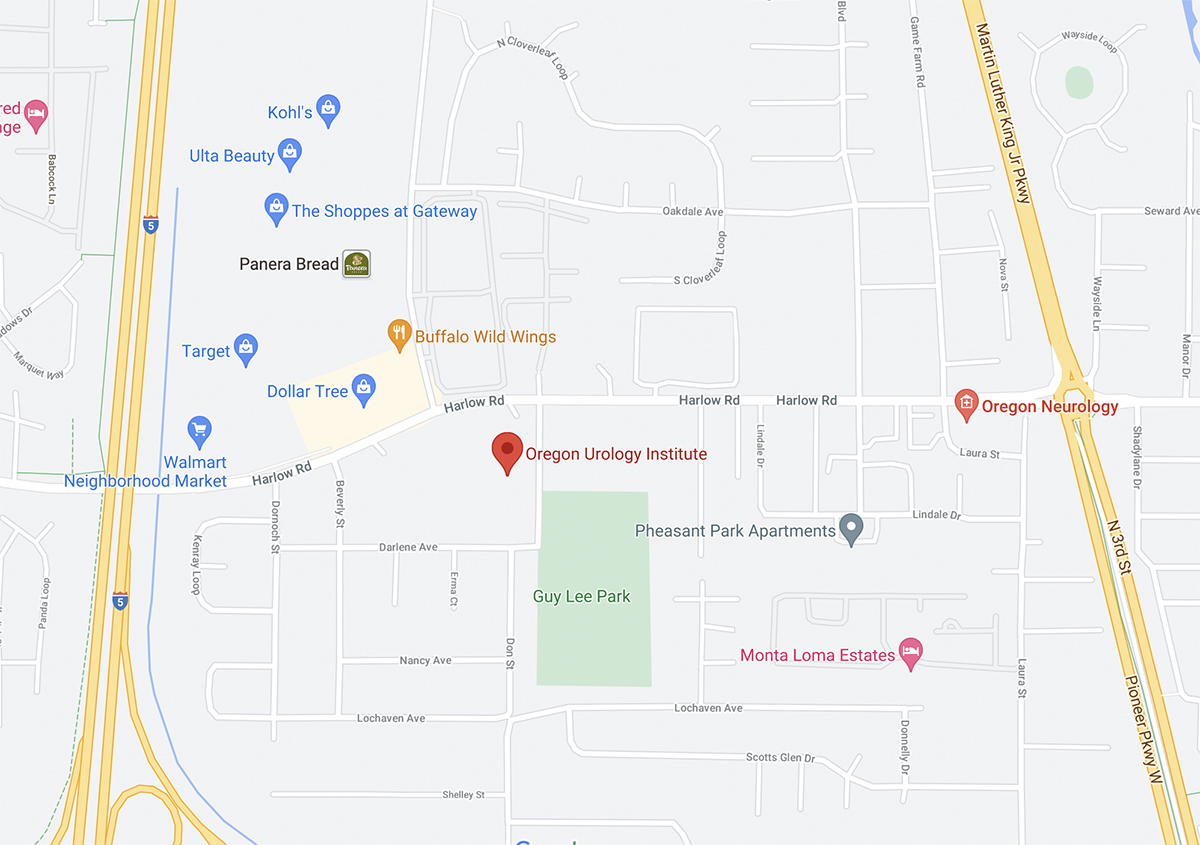
2400 HARTMAN LANE,
SPRINGFIELD, OR 97477
PHONE: 541.334.3350
TOLL FREE: 1.800.246.9925
FAX: 541.343.3459
FIND US
JOIN OUR TEAM