



As men grow older, it’s normal for the prostate gland to enlarge.
This increase in size doesn’t cause problems for all men, but for many, it triggers frustrating symptoms.
Aquablation, available near Eugene, OR, is an advanced treatment that aims to resolve BPH symptoms and help men get their life back.


WHAT IS BPH AND ITS SYMPTOMS?
1. Voiding symptoms
These symptoms occur when an enlarged prostate interferes with urine flow, and can include:
- A weak or slow stream
- Straining
- Trouble starting
- Stopping and starting mid-stream
- Dribbling at the end of urination
- Feeling like your bladder didn’t empty completely
2. Storage symptoms
These symptoms are related to how the bladder holds or releases urine, and may involve:
- Needing to urinate more often than usual
- Sudden urges
- Nighttime bathroom trips
- Leaking due to urgency
Typically, interventions such as lifestyle changes or medications are the first options for relief. However, if they do not work, Aquablation therapy may be the answer.
WHAT IS AQUABLATION THERAPY?
Since it avoids heat, Aquablation has the potential to preserve surrounding nerves and tissues. This reduces the risk of side effects such as incontinence or sexual dysfunction.
WHO CAN HAVE AQUABLATION THERAPY?
- Have tried medications for BPH, but they haven’t given you sufficient relief
- Are looking for a surgical solution, but are concerned about long-term side effects
- Have a larger prostate that makes other minimally invasive procedures more difficult
- Prioritize a treatment that balances strong symptom relief with a strong safety profile
HOW DOES THE AQUABLATION PROCEDURE WORK?
Your surgeon will use ultrasound imaging and a thin tube with a camera inserted through the urethra to visualize the prostate in real-time.
The robotic system directs a pressurized water jet to remove only the obstructive prostate tissue. Any bleeding is addressed with minimal cautery.
Once the procedure is done, a urinary catheter will help your bladder drain while your urethra begins to heal. Some men stay overnight in the hospital, while others go home the same day. Catheter removal is typically within 24 to 48 hours, depending on the extent of swelling or if additional time is needed for healing.
As healing begins, it’s common to experience mild burning during urination or some urinary urgency. These symptoms are typically temporary and manageable with mild pain control.
Your doctor will guide you on when it’s safe to return to everyday activities.
WHAT ARE THE BENEFITS OF AQUABLATION?
Aquablation can offer effective relief from BPH symptoms in patients with both moderate and large prostate sizes. Symptom improvement typically lasts 3 to 5 years or longer, which is longer than with some other procedures.
WHAT ARE THE POTENTIAL RISKS?
As with any medical procedure, Aquablation has potential risks. These may include:
- Temporary inability to urinate or urinary retention
- Bleeding or blood in the urine
- Urinary tract infections
- Formation of scar tissue or strictures in the urethra
- Possible changes in ejaculation, like reduced volume or retrograde ejaculation
Aquablation is a promising option for men with BPH, particularly when medications haven’t worked. Before deciding, it’s important to talk with a urologist about your specific symptoms, prostate size, and individual risks. In many cases, comparing Aquablation with other surgical options can help you weigh which approach offers the best balance between symptom relief and side effects.
FAQs
1. How long does recovery usually take?
Most men notice steady improvement in their symptoms over the first few weeks after Aquablation, with side effects fading as healing progresses. By four to six weeks, many men are back to their normal routines. However, your urologist will guide you on when to resume specific activities such as exercise or sexual activity.
2. Can Aquablation be repeated if symptoms come back?
Yes. While Aquablation provides relief for most men, the prostate can continue to grow with age. If symptoms return years later, you can have Aquablation again or consider another procedure. This flexibility is one reason many men choose it as an option.
3. Does Medicare cover Aquablation?
Yes, Medicare generally covers Aquablation. Coverage depends on your prostate volume (currently 30 to 150 cubic centimeters) and other health markers.
CONTACT US
2400 HARTMAN LANE,
SPRINGFIELD, OR 97477
PHONE: 541.334.3350
TOLL FREE: 1.800.246.9925
FAX: 541.343.3459
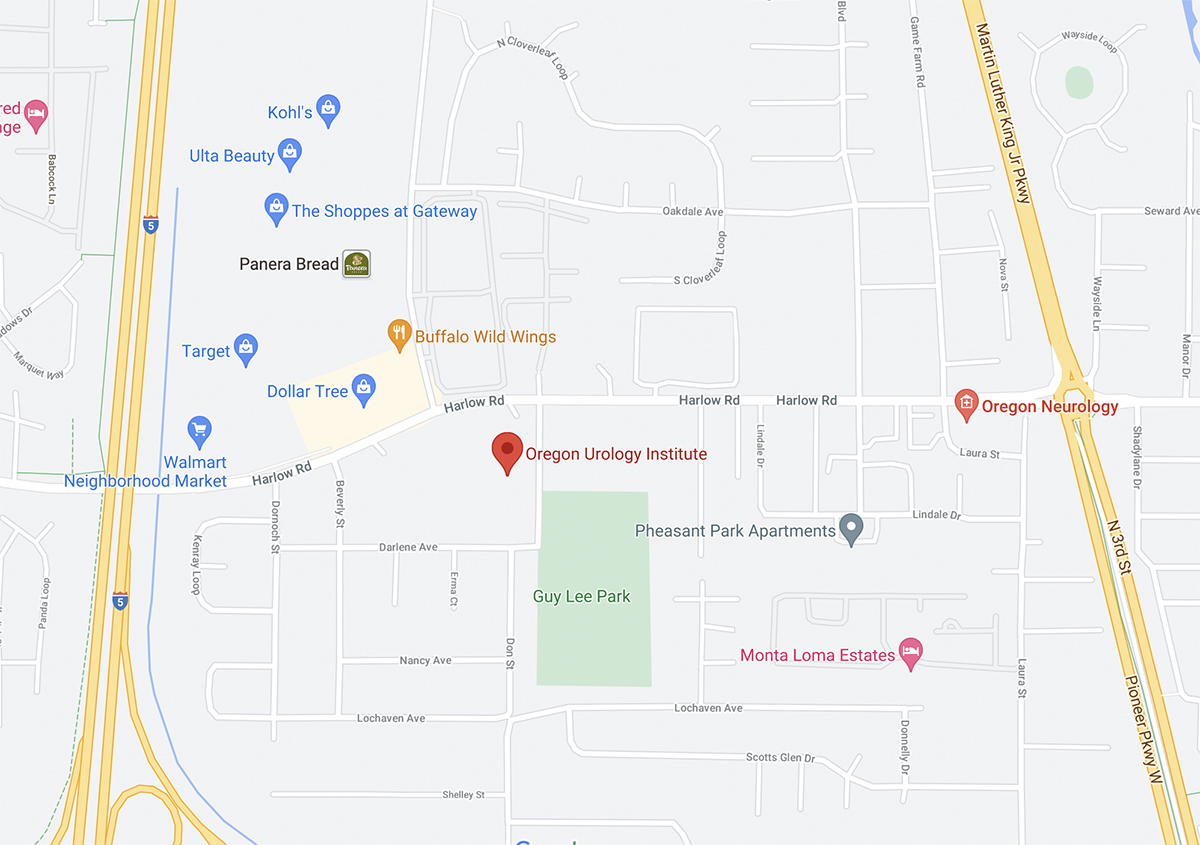
FIND US
JOIN OUR TEAM